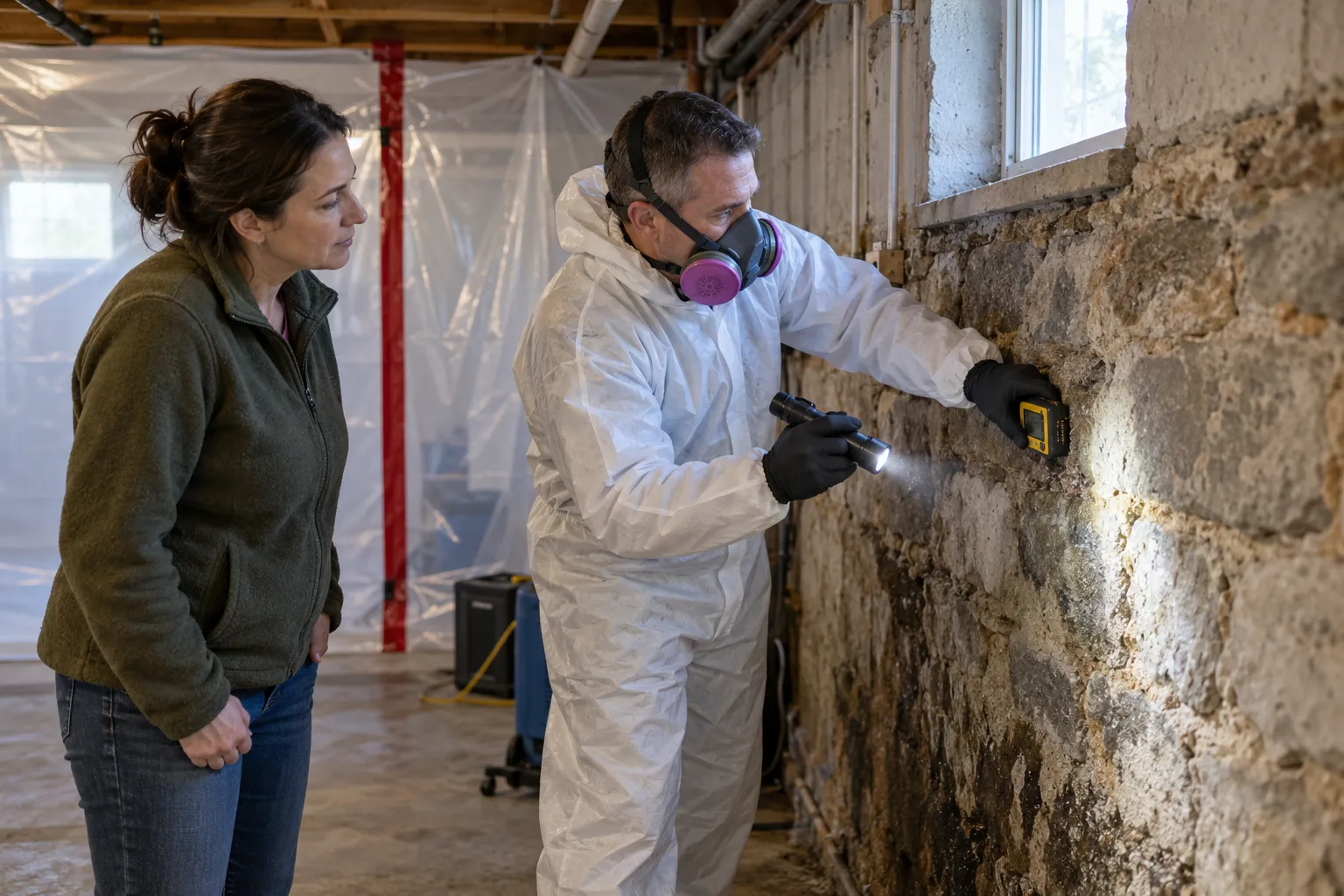
"Black mold" is a common name for dark-colored mold growth, often seen on bathroom ceilings, around windows, in basements and on drywall after a leak. The name is often linked to a species called Stachybotrys chartarum, but many types of mold look dark. Color alone doesn't tell you which type you have, and the removal process is much the same either way.
Drawntraditional Mold Help is a referral service. When you call, we connect you with an independent local provider in the Agawam Town area who handles black mold removal. The provider inspects the growth, finds the moisture source, explains what needs to be removed and gives you a written estimate. Removal usually includes containment, careful removal of affected materials, cleaning and drying. If you have health concerns about mold, talk to a doctor. There's no obligation to hire the provider you speak with.
Found Black Mold? Start Here
Dark spots on a wall or ceiling can be alarming. The most useful thing you can do right now is leave the growth alone. Don't scrub it, sand it or spray it with bleach and wipe it off. That can spread spores and often leaves roots in porous material like drywall.
Close off the room if you can. Don't run fans that blow air across the area. Look for an obvious water source, like a leak under a sink or a wet ceiling, and stop it if you safely can.
Then call for help. A provider can tell you how far the growth goes and what it will take to remove it. We can't give medical advice, so talk to a doctor if anyone at home has health concerns.
What Is Black Mold?
"Black mold" isn't a scientific term. People use it for any mold that looks black, dark green or dark gray. The name is most often linked to Stachybotrys chartarum, a mold that grows on materials that stay wet for a long time, like drywall paper, ceiling tiles and wood.
Many other common molds look dark too. You can't tell which type you have just by looking. Lab testing can identify it, but for most homeowners the bigger question is how much growth there is and how to remove it safely. The removal process is largely the same no matter what the species is.
Where Black Mold Shows Up
Dark mold tends to grow where moisture lingers:
- Bathroom ceilings and corners. Steam without good ventilation settles on cool surfaces.
- Window sills and frames. Condensation drips and soaks into wood and drywall.
- Behind and under sinks. Slow drips from supply lines and drains go unnoticed.
- Basements and crawl spaces. Damp air and seepage keep surfaces wet.
- Drywall after a leak. Gypsum board that stays wet is a common place for dark growth.
- Attic sheathing. Trapped warm, wet air can stain roof boards.
Why Bleach Usually Isn't Enough
Bleach can lighten mold stains on hard, non-porous surfaces like tile. On porous materials such as drywall, wood and carpet, it often doesn't reach the growth inside. The surface looks clean, but the mold can return. Bleach also adds water to the material, which can make the moisture problem worse.
Never mix bleach with ammonia or other cleaners. The fumes can be dangerous.
For anything more than a very small spot on a hard surface, professional removal is usually the safer choice. Many guidelines suggest getting professional help when the moldy area is larger than about 10 square feet.
How Black Mold Removal Works
Providers use the same careful process they use for other mold jobs.
Inspection
The provider checks the visible growth, measures moisture and looks for hidden spread inside walls, ceilings or floors.
Containment
The work area is sealed with plastic sheeting. HEPA air scrubbers and negative air pressure help keep spores from moving into other rooms.
Protective Gear
The crew wears respirators, gloves and protective suits while removing growth.
Removal of Affected Materials
Moldy drywall, insulation, ceiling tiles and carpet are cut out, bagged and sealed before they leave the work area.
Cleaning and Treatment
Framing and other surfaces that stay are HEPA-vacuumed, cleaned and often treated. Some wood may be sanded or encapsulated.
Drying and Final Check
Dehumidifiers bring moisture down. The provider inspects the area before taking containment down. Some homeowners choose clearance testing.
Fixing What Caused It
Black mold is a sign of long-lasting moisture. If the cause isn't fixed, the growth is likely to come back. Common fixes include repairing a leak, adding or upgrading a bathroom fan, improving attic ventilation, sealing a crawl space or running a dehumidifier. Ask the provider what they think caused the growth and how to prevent it.
Your Belongings
Mold can also grow on things stored in damp rooms. Sort your items once the provider says it's safe to handle them:
- Hard items like glass, metal and sealed plastic can usually be cleaned.
- Soft items like mattresses, upholstered furniture and stacked cardboard are harder to clean and are often thrown away if growth has soaked in.
- Clothing and fabric may be washable, depending on how much growth is present.
- Papers, photos and books may need help from a document restoration service.
Take photos of damaged belongings before you throw anything away. These records can help if you file an insurance claim. Some providers offer contents cleaning, and others can suggest a local company that does.
Questions to Ask the Provider
The providers in our network are independent businesses. Before work begins, ask:
- Are you licensed for mold remediation in Massachusetts, if required?
- Is your crew trained to IICRC standards?
- How will you contain the area and protect the rest of my home?
- What will you remove, and what will you clean?
- Can I get a written estimate before you start?
You're never obligated to hire the first provider you speak with.
See dark mold spreading? Call to check provider availability near you.
What's Included
Growth and Moisture Inspection
The provider checks visible growth, measures moisture and looks for hidden spread.
Containment and Protection
The area is sealed off, and HEPA air scrubbers help protect the rest of your home.
Material Removal
Moldy drywall, insulation and ceiling materials are removed, bagged and hauled out.
Cleaning and Drying
Remaining surfaces are cleaned and treated, and the area is dried to normal levels.
What Does Black Mold Removal Cost?
Cost depends on how much growth there is, where it is and what must be removed. These are typical U.S. ranges that vary by job, so always get a written quote.
| Item | Typical range | Notes |
|---|---|---|
| Small patch on a wall or ceiling | $500 – $1,500 | Small area, easy access |
| Bathroom or single room | $1,500 – $4,000 | Includes some drywall removal |
| Basement or crawl space | $2,000 – $7,000 | Depends on size and moisture |
| Attic sheathing | $1,500 – $5,000 | Cleaning or treating roof boards |
| Per square foot | $10 – $25 | Varies with access and materials |
| Lab test to identify mold type | $50 – $200 per sample | Optional, not always needed |
How It Works
1. Call Drawntraditional Mold Help
Tell us where you see dark mold and your location. We connect you with a local provider.
2. Inspect and Estimate
The provider checks the growth and moisture, then gives you a written estimate.
3. Contain and Remove
The area is sealed off, and moldy materials are removed and bagged.
4. Clean, Dry and Confirm
Surfaces are cleaned, the area is dried, and the work is checked with you.
Why Call Drawntraditional Mold Help
Quicker Path to Help
One call connects you with a local provider who handles black mold removal.
Local Experience
Providers in the Agawam Town area know local homes and the spots where dark mold tends to grow.
Clear Estimates
Ask for a written estimate before work starts, so there are fewer surprises.
No Obligation
Talk to a provider, ask your questions and decide what's right for your home.